MDC urges aquarium owners to check for invasive species that may have been in locally sold tank additions
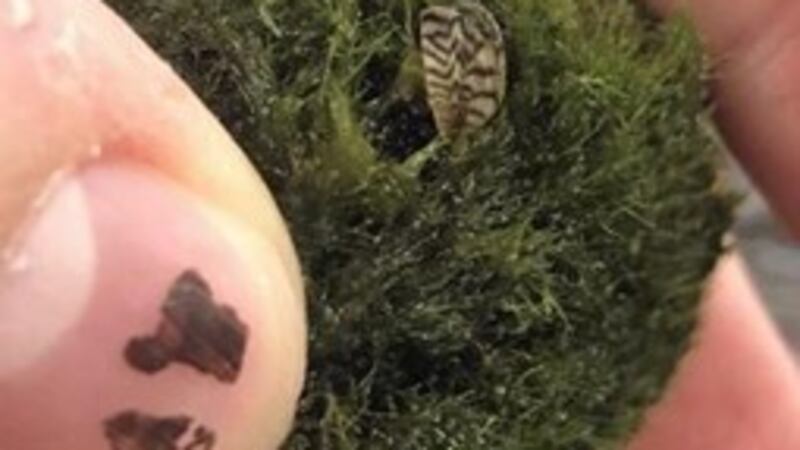
ST. LOUIS, Mo. (First Alert 4) - The Missouri Department of Conservation (MDC) is urging aquarium owners to check for an invasive species that may be hiding in a common tank addition.
According to MDC, an invasive species called zebra mussels is being discovered in moss balls originating in Washington, and the balls may have been sold in Missouri.
Aquarium owners and retailers of aquarium equipment are encouraged to check any moss balls they have bought in the past year for zebra mussels and decontaminate or dispose of the moss balls if a mussel is found. Aquariums containing moss balls infected with zebra mussels may also have larvae of the zebra mussels, called veligers, in the water. If the aquarium water is poured into a drain or near a creek or lake, then the zebra mussels may be introduced into that body of water.
Ways to properly decontaminate any moss balls or aquarium systems infected with zebra mussels can be found on the U.S. Fish and Wildlife Services website.
Invasive zebra mussels first came to North America through international shipping and were discovered in Lake St. Clair near Detroit in 1988. The first one was found in Missouri in 1991 on the Mississippi River near St. Louis; since then, zebra mussels have been found in most waterways in Missouri.
The mussels rapidly reproduce and risk clogging pipes for power plants and public drinking water, impacting fisheries and fouling boat hulls and motors. They can also disrupt the aquatic ecosystem by hurting the population of native freshwater mussels, which help filter out toxins and algae in the water they’re in.
MDC also encourages “clean boating” when transporting boats between waterways as a way to help prevent the spread of zebra mussels and other invasive flora and fauna.
More information on zebra mussels and other invasive species in Missouri can be found on the MDC website.
Copyright 2024 KMOV. All rights reserved.